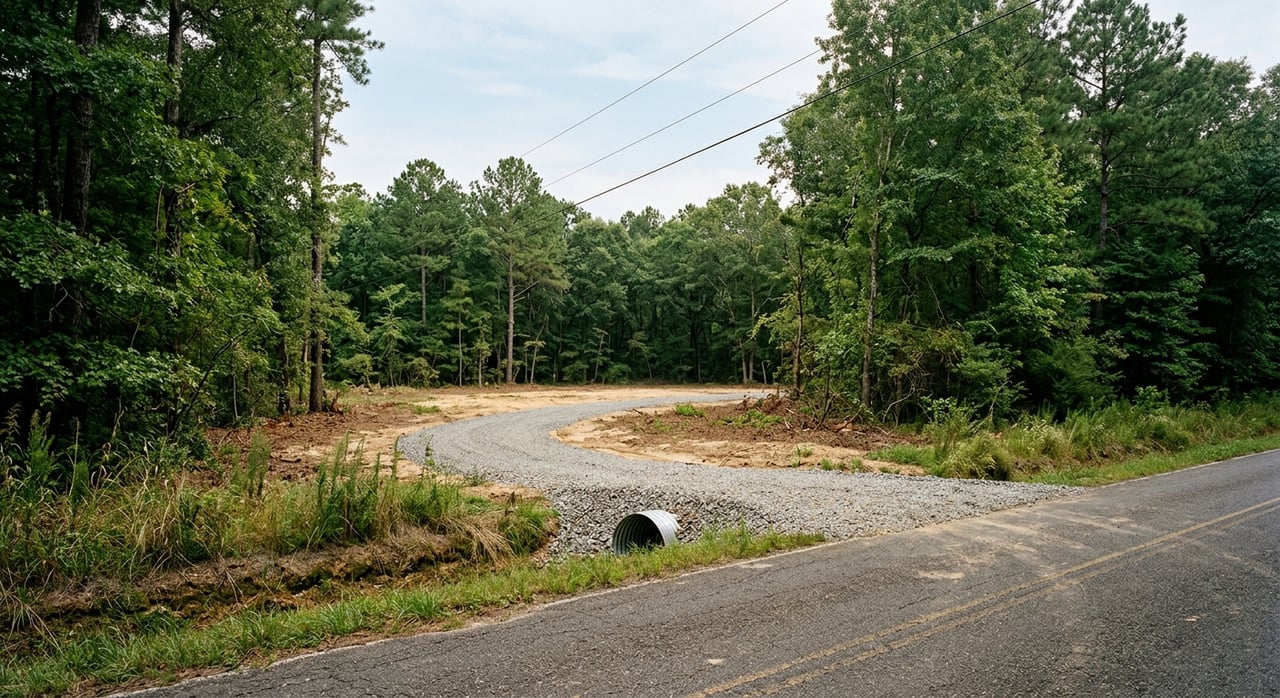
If you are thinking about buying land or a homesite in Claxton, it helps to know that not every parcel works the same way. One property may be ready for a simple build, while another may need extra review for road access, utilities, septic, flood concerns, or future land division. When you understand those moving parts early, you can shop with more confidence and avoid expensive surprises. Let’s dive in.
Why Claxton land looks different
Claxton sits in Evans County, a smaller rural market where land plays a bigger role in local real estate than it does in many suburban areas. Census estimates show Evans County had 11,028 residents, 4,784 housing units, a 65.4% owner-occupied rate, and a median owner-occupied home value of $138,200.
That local profile matters because your search may include more than just neighborhood lots. The county’s 2022 Census of Agriculture profile reported 167 farms covering 44,380 acres, with an average farm size of 266 acres. In practical terms, you are likely to see everything from small homesites to larger tracts suited for farming, timber, recreation, or long-term holding.
Current market inventory reflects that mix. A recent Claxton land snapshot showed listings from 0.16 acres up to 181 acres, with several options in the 1- to 10-acre range and others much larger. That gives buyers flexibility, but it also means you need to match the property to your actual plans.
Start with your intended use
Before you look too hard at price per acre, get clear on what you want the land to do for you. A tract that looks appealing online may not fit your goals if access, utility service, or land restrictions do not line up with your plans.
In the Claxton area, buyers may encounter property marketed as homesites, hunting land, farms and ranches, timberland, recreational tracts, horse property, commercial land, or undeveloped land. Evans County ordinances also include chapters for manufactured homes or mobile homes and RV parks or campgrounds, which shows how varied local land use can be.
Ask yourself a few basic questions early:
- Do you want a homesite for a primary residence?
- Are you looking for a small tract with privacy and room to build?
- Do you need land for farming, timber, or recreation?
- Are you thinking about holding land for future use?
- Do you want the option to divide the property later?
Your answers shape everything else, from frontage and driveway permits to septic review and tax questions.
Check whether the parcel is in the city or county
One of the first details to confirm is whether the property sits inside Claxton city limits or in unincorporated Evans County. That line can affect utilities, zoning review, and the permit path for your project.
Inside Claxton, the city publishes charges for water, sewer, sanitation, fire protection, and natural gas. The city’s utility application also distinguishes between in-town and out-of-town service. That means the exact parcel location and utility tap point are not small details. They are key parts of your due diligence.
Parcels inside city limits may also be subject to a different set of rules than county tracts. Claxton’s city code includes zoning authority and wetlands protection provisions, while county land may follow a different review path.
Road frontage matters more than many buyers expect
Road access is one of the biggest factors in whether land is truly usable. In Claxton and nearby areas, the road type can change the approval process, development cost, and overall convenience of the tract.
Some listed parcels front major corridors like US 301 or US 280, while others sit on local roads such as Duval Street, Sunbury Road, Perry Road, or Peters Street. That may sound simple, but frontage on a state route can involve different access questions than frontage on a county road.
Evans County requires a permit before any driveway is installed to a county road. The ordinance calls for an application to the county clerk, a $100 fee, inspection by the county road superintendent, and compliance with Georgia Department of Transportation road safety requirements.
For parcels on state routes, GDOT access management rules also apply to roads and streets under its authority. If you are buying a homesite or planning a new entrance, ask early who has to approve the driveway and whether more than one jurisdiction is involved.
If you may divide the land later, ask now
A lot of buyers think about land division after closing, but it is smarter to raise that question before you buy. A parcel with plenty of acreage may still have limitations tied to frontage, road layout, or local subdivision rules.
Evans County’s subdivision ordinance requires prior stamped approval before plat filing. It also expects major subdivisions to use interior roads rather than direct lot-by-lot access to public roads. If you hope to split a tract for family use, resale, or future development, those rules matter from the beginning.
This is one area where technical local guidance can save you time. A property may look like an easy split on paper, but the actual layout, access, and approval path may tell a different story.
Utilities can make or break a homesite
A beautiful tract is only as practical as its utility setup. For many buyers in Claxton and surrounding areas, the big question is whether the property has access to city utilities or will rely on private well and septic.
If the parcel is served by private systems, septic feasibility should be one of your earliest checks. Evans County’s onsite sewage ordinance says construction should not proceed on septic-served buildings until the county health department approves the system.
Well placement matters too. Georgia DPH says private wells should be set at least 50 feet from a septic tank and 100 feet from a septic absorption field. On a tighter tract, those setbacks can affect where you can place the house, driveway, and outbuildings.
Flood and wetlands review should happen early
Low-lying ground, drainage features, wetlands, and creek-adjacent land can affect what you can build and how you plan the site. Even if a tract looks dry during a showing, flood review is still a smart step before closing.
FEMA identifies the Flood Map Service Center as the official source for National Flood Insurance Program flood hazard information, and Evans County has a flood damage prevention ordinance. If the parcel is near drainage features or appears to include lower ground, review maps and local floodplain rules early.
For city properties, Claxton’s code also contains wetlands protection provisions. That does not mean a parcel cannot work for your goals, but it does mean you should verify conditions before you commit.
Tax treatment may matter on larger tracts
If you are buying land for agriculture, timber, or long-term holding, property tax treatment can be an important part of the decision. Georgia’s conservation use assessment rules may apply to qualifying land, and those rules come with specific requirements.
According to the Georgia Department of Revenue, conservation-use property is assessed at 40% of current use value, must stay in a qualifying use for 10 years, and the application is filed with the county board of tax assessors by the county’s ad valorem deadline. That is not something you want to sort out after the purchase structure is finalized.
The Evans County assessor’s office also provides parcel search tools and information on special property tax programs. If current use treatment is part of your plan, ask how the land is presently classified and what changes could affect that status.
Broadband and long-term practicality
For many buyers, rural land no longer means giving up connectivity. That matters if you work remotely, want flexibility for future building, or simply care about day-to-day convenience.
Both Evans County and Claxton appear on Georgia’s Broadband Ready Communities list. While that does not guarantee service at every parcel, it is a useful sign for buyers thinking about long-term usability and future development potential.
A practical due diligence checklist
When you are comparing land or homesites in Claxton and nearby areas, keep this checklist handy:
- Verify the exact parcel, acreage, ownership, and tax status with the Evans County tax records before relying on a listing description.
- Confirm whether the tract is inside Claxton city limits or in unincorporated Evans County.
- Ask what utility service is available and where connections or tap points are located.
- If the land will use well and septic, get the soil and septic questions answered before closing.
- Ask who must approve driveway access: Evans County, GDOT, or both.
- Review flood maps and local floodplain rules for low-lying or drainage-adjacent property.
- If future land division is important, review subdivision requirements early.
- If the tract may stay in agriculture or timber, ask about current-use tax treatment and covenant implications.
Why local land knowledge matters
Buying land is different from buying an existing house. You are not just evaluating bedrooms and finishes. You are looking at access, frontage, utilities, topography, potential use, and the rules that affect all of it.
That is why local and technical knowledge can be so valuable in a market like Claxton. When you have guidance from a team that understands surveying, land utility, road access, and development considerations, you are in a better position to choose land that truly fits your plans.
Whether you are searching for a simple homesite, a few acres outside town, or a larger tract with long-term potential, careful due diligence helps you move forward with confidence. If you want practical guidance on Claxton land, homesites, or nearby Southeast Georgia property, connect with Brown Land and Realty.
FAQs
What should you verify before buying land in Claxton?
- You should verify the parcel boundaries, acreage, ownership, tax status, road access, utility options, flood concerns, and whether the land is inside Claxton city limits or unincorporated Evans County.
Does a Claxton-area homesite need driveway approval?
- Yes, if the driveway connects to a county road, Evans County requires a permit before installation, and parcels on state routes may also require GDOT access review.
How important is septic approval for Evans County land?
- It is very important because septic-served construction should not proceed until the county health department approves the system, so buyers should address that question before closing.
Can you split a larger tract in Evans County later?
- Possibly, but subdivision rules matter early, and major subdivisions are generally expected to use interior roads rather than direct lot-by-lot access to public roads.
Are city-utility questions different inside Claxton city limits?
- Yes, city-limit status can affect water, sewer, sanitation, fire protection, natural gas service, zoning review, and the overall permit path for a homesite.
Do flood maps matter when buying land near Claxton?
- Yes, especially for low-lying, creek-adjacent, or drainage-adjacent parcels, because flood hazard review can affect buildability and site planning.